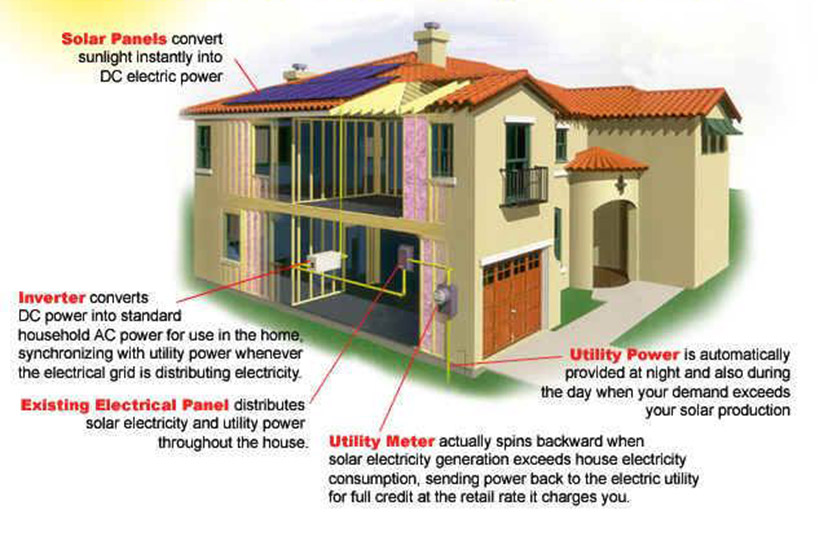
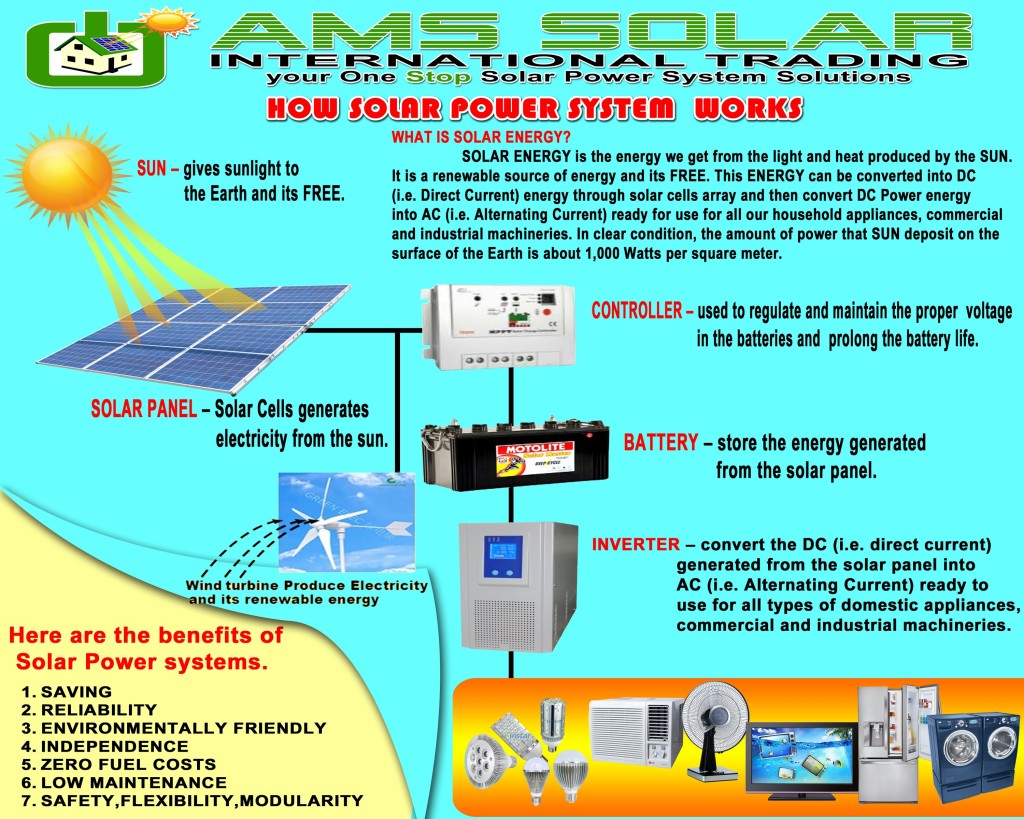
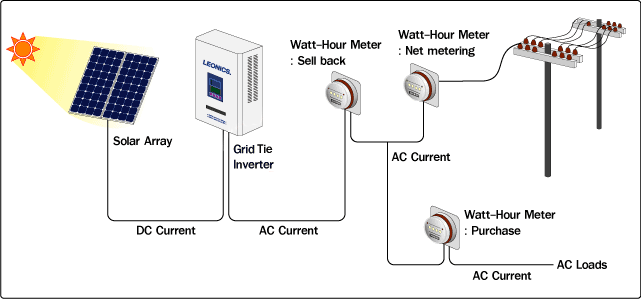
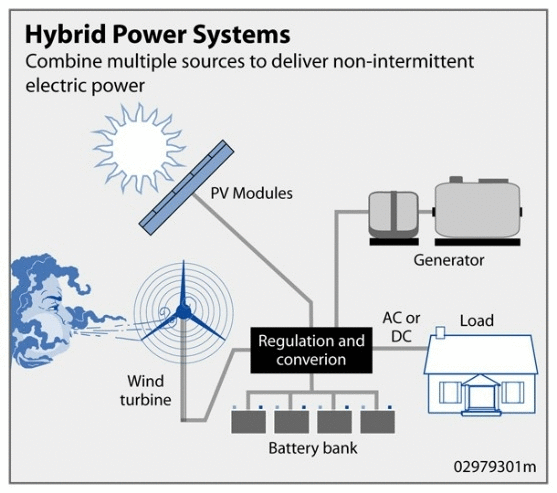
Grid-Tied systems use PV panels to generate DC power. The DC power goes to a grid interactive (grid-tied) inverter which converts the PV panel DC power to 240 volts AC power that is compatible with the power grid. The power from the PV panels goes (via the grid tie inverter) to supply the household power needs.
If the PV system is generating more power than the house can use, the excess is sent out over the grid to supply others. If the house needs more power than the PV system can supply, then the extra is drawn from the grid as usual.
System Benefits & Key Characteristics:
- Lowest initial upfront cost (because there is no need for batteries and charge controllers).
- Lowest ongoing maintenance cost over system lifespan (no structural battery banks to maintain and replace).
- Simplest architecture layout to securely install.
- Most efficient system variant (because there are no tracking losses associated with charging battery arrays).
- Modular deployment flexibility — you can start small and add panels later (with some scale limitations).
- During daytime runtimes, the solar array powers the house load directly or shares raw power lines with the public utility, minimizing regular electricity billing profiles.
Operational Contingencies & Limitations:
- Grid tied systems only work when the public service utility line infrastructure remains fully functional.
- If the regional grid power goes out, the grid tie inverter array is required to shut down immediately for worker protection.
- At night time or when the sun is down to its minimum solar radiation index, missing electrical power must be drawn from the grid network as usual.
- In the event of utility power line failure at night time, no emergency power will be produced locally.